Topic 1 Introduction and Context

Medical & Health Perspectives of Menopause

  • Menopause is a natural life stage that marks the end of reproductive years but experiences vary widely.
  • Hormonal changes trigger sleep disruption, brain fog, anxiety, joint pain, and other symptoms that impact daily life and work performance.
  • On average, women report 10+ symptoms yet stigma and gaps in awareness delay support for many.
  • With women over 50 as the fastest-growing workforce demographic in Europe, health systems and workplaces must adapt to this reality.
  • This module applies the Biopsychosocial and Health Belief Models to illustrate how menopause affects health and behaviour and how early intervention improves outcomes across settings.

Purpose of the Training:

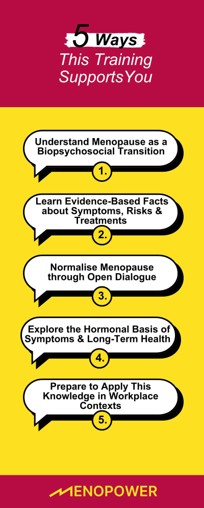
  • Demystify menopause as a biopsychosocial transition that affects health, identity, and work; not just a “women’s issue.”
  • Equip all participants, regardless of gender or role, with evidence-based knowledge on symptoms, risks, and treatments.
  • Encourage open conversations to reduce stigma and normalise menopause support.
  • Understand how hormonal changes drive both immediate symptoms and long-term health considerations.

Key Message:
Understanding menopause through medical and psychosocial lenses empowers individuals and lays the foundation for supportive workplaces.

Why Menopause Support Fails:

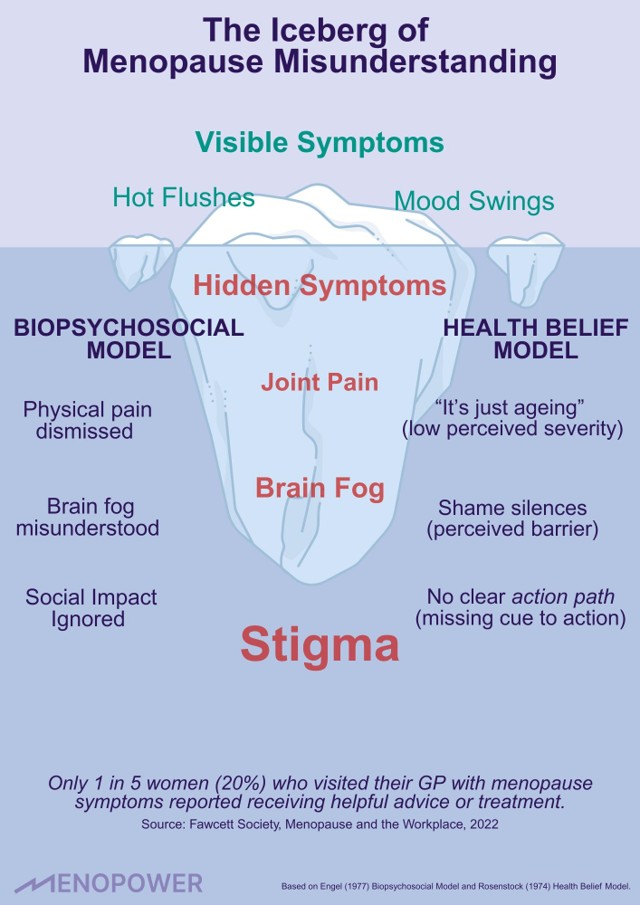
  • Menopause is often reduced to hot flashes or mood swings. But many symptoms like joint pain, brain fog, and anxiety are often dismissed.
  • Most women experience 10+ symptoms, yet many don’t seek help.
  • Biopsychosocial Model: Affects physical health, emotional, and social health, not just hormones.
  • Health Belief Model Barriers:

⚠️ Symptoms seen as “normal” (low perceived severity)

🚫 Stigma/shame (perceived barriers)

📉 No clear pathways to support (missing cues to action)

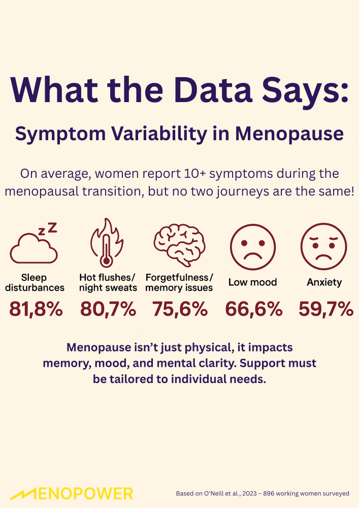
What the Data Says: Symptom Variability in Menopause

On average, women report 10.7 different symptoms during the menopause transition, and no two experiences are the same.
Most frequently reported symptoms:

  • Sleep disturbances: 81.8%
  • Hot flushes/night sweats: 80.7%
  • Forgetfulness/memory problems: 75.6%
  • Low mood: 66.6%
  • Anxiety: 59.7%

This complexity reflects a biopsychosocial transition, not just a hormonal one.
Support must be personalised not standardised.

Menopause Is More Than Hot Flushes

For some, menopause starts early, triggered by surgery, medical treatments, or underlying conditions.
For others, it brings long-term health risks like heart disease, osteoporosis, and muscle & joint loss.

This module will explore these realities in depth.

Menopause is not one-size-fits-all, and it’s not just about symptoms.