Topic 1 Introduction and Context
By the end of this module, participants will:
1.Understand the workplace impact of menopause and the rationale for employer responsibility.
2.Recognise how job demands and job resources influence menopausal experience and work outcomes.
3.Become familiar with evidence-based strategies for reducing stigma and supporting employee wellbeing.
4.Identify key adjustments and interventions aligned with legal, ethical, and business priorities.
5.Reflect on their own workplace context and outline next steps for improving support.
Keywords:
Menopause, workplace support, retention, organisational culture, flexi-work, stigma, workplace health, MSK Health, occupational health, job demands
Strategies for Employers
- Menopause intersects with critical career stages, often during peak working years.
- Symptoms can affect attendance, performance, confidence, and retention, especially in unsupportive or high-pressure environments.
- Lost productivity and absenteeism due to menopause cost organisations billions annually (Faubion et al., 2024).
- Despite growing awareness, many employers still lack policies, strategies, or training to support menopausal employees.
- Stigma, silence, and outdated assumptions continue to create barriers to disclosure and accommodation.
- Supportive job resources (like flexible work, autonomy, and informed management) can mitigate these challenges.
- This aligns with the Job Demands-Resources (JD-R) Model and the Salutogenic Model of Health, which frame menopause support as a matter of job design, organisational climate, and employee empowerment.

This video aligns with the call for systemic employer responsibility & legal framing raised in Module 4: “Why should you be a menopause friendly employer?”A webinar from Gunnercooke LLP exploring why workplace menopause support is a strategic and ethical imperative for employers.
EMBEDDED LINK TO VIDEO: Why should you be a menopause friendly employer?
Purpose of the Training:
- Frame menopause as an organisational responsibility, not just a personal health matter.
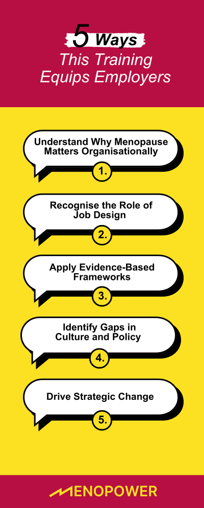
- Equip leaders, HR professionals, and managers with evidence-based knowledge on workplace strategies.
- Highlight how job demands and job resources affect menopausal employees’ performance, retention, and wellbeing.
- Encourage systemic, proactive approaches, including policy development, job redesign, and leadership engagement.
Key Message:
Supporting employees through menopause is not about individual accommodations alone, it’s about transforming workplace systems. Empowered, informed employers can reduce stigma, retain talent, and foster healthier organisational cultures.
Work Conditions Matter: Framing Through the JD-R Model
- High job demands (e.g. inflexible schedules, understaffing) combined with low job resources (e.g. unsupportive management, lack of autonomy) are linked to burnout, absenteeism, and turnover.
- These dynamics are best explained by the Job Demands–Resources (JD-R) Model, which shows how work conditions, not just symptoms, shape wellbeing and performance.
- Job demands drain energy, while job resources protect against stress and increase engagement.
- Menopause support is best approached through job design and organisational culture, not only through individual accommodations.
Why Culture Counts: Framing Through the Salutogenic Model of Health
- The Salutogenic Model of Health focuses on creating environments that support health by fostering:
○Predictability (clear expectations)
○Manageability (resources to cope)
○Meaningfulness (sense of value and contribution)
- Workplaces that support these elements help reduce the impact of menopause-related symptoms.
- Culture matters: open dialogue, flexibility, and psychological safety directly affect wellbeing.
The Evidence for Change: Statistical Case for Employer Action
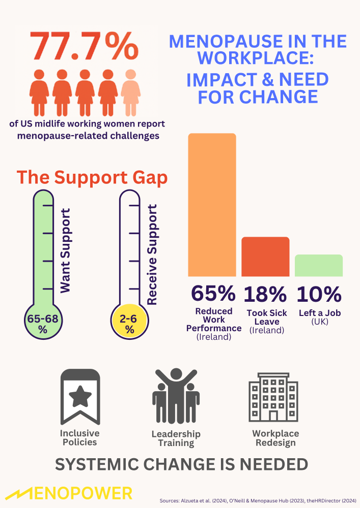
- In a U.S. study, 77.7% of midlife working women reported menopause-related challenges at work.
- Over 70% experienced moderate to severe symptoms such as fatigue, anxiety, and brain fog (Alzueta et al., 2024).
- In Ireland, 65% reported reduced work performance; 18% had taken sick leave (O’Neill et al., 2023).
- In the UK, 1 in 10 women have left a job due to menopause symptoms; many others reduce hours or avoid promotions (theHRDirector, 2024).
- Although 65–68% want workplace support, only 2–6.3% report receiving it (Alzueta et al., 2024).
- These figures call for systemic change, including leadership training, workplace redesign, and inclusive policies.