Topic 2 Key concepts and Theoretical framework
Creating a supportive work environment for menopausal and perimenopausal women requires grounding in key concepts and theories related to workplace inclusion, diversity, and equity. This section explores foundational ideas and frameworks that inform our approach, while also highlighting how these intersect with real-life experiences of women during menopause.
Menopause as a workplace issue
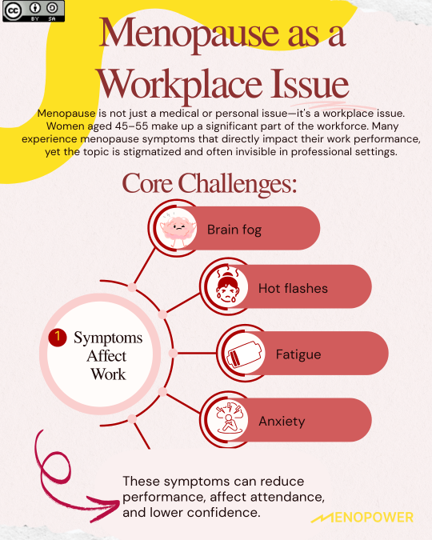
Menopause is not solely a medical or personal matter—it is also a workplace concern. Women in midlife (typically between 45 and 55) represent a significant portion of the workforce, and many experience symptoms that impact their work. Yet, menopause remains a stigmatised and often invisible issue in professional settings.
Core ideas:
- Menopause symptoms—like brain fog, hot flashes, fatigue, and anxiety—can directly affect performance, attendance, and confidence.
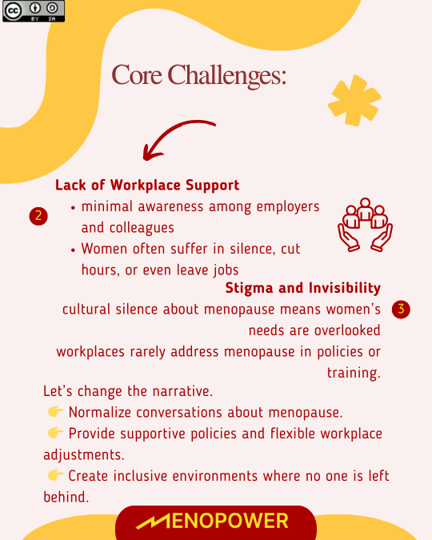
- Lack of awareness and support in the workplace leads many women to suffer in silence, sometimes even leaving jobs or reducing hours.
- Societal and workplace stigma contributes to the invisibility of menopausal women’s needs.
Diversity, Equity, and Inclusion (DEI)
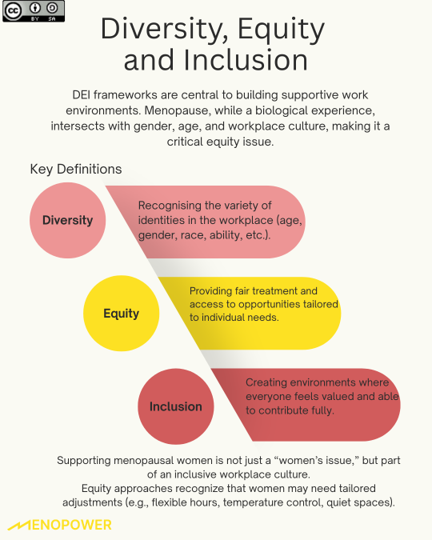
- DEI frameworks are central to building supportive work environments. Menopause, while a biological experience, intersects with gender, age, and workplace culture, making it a critical equity issue.
Key definitions:
- Diversity: Recognising the variety of identities in the workplace (age, gender, race, ability, etc.).
- Equity: Providing fair treatment and access to opportunities tailored to individual needs.
- Inclusion: Creating environments where everyone feels valued and able to contribute fully.
In Practice:
- Supporting menopausal women is not just a “women’s issue,” but part of an inclusive workplace culture.
- Equity approaches recognize that women may need tailored adjustments (e.g., flexible hours, temperature control, quiet spaces).
Intersectionality
Coined by Kimberlé Crenshaw, intersectionality refers to how different forms of identity and discrimination overlap and influence each other. Menopause doesn’t occur in a vacuum—it is shaped by race, class, disability, sexual orientation, and more.
Implications:
- A woman of colour or a working-class woman may face more barriers in accessing support than a white, middle-class colleague.
- Workplace strategies must account for these multiple, overlapping identities to be truly inclusive.
Psychological safety and workplace culture:
Creating a supportive environment requires more than policies—it demands psychological safety, where employees feel safe to speak up without fear of stigma or punishment.
Key points:
- Employees are unlikely to disclose menopause-related challenges if the culture is dismissive, gendered, or ageist.
- Leadership plays a vital role in setting a tone of openness, empathy, and normalization of health-related discussions.
Employer’s Psychological Safety Checklist ‘ to learn more
The Life-Course Approach
This perspective views menopause as one phase in a woman’s life, situated within her broader career and personal development.
Understanding this helps:
- Align organizational support with other life-stage policies (e.g., parental leave, flexible work for caregivers).
- Prevent treating menopause as an isolated “problem” rather than part of a continuum of women’s workplace experiences.
From Theory to Practice
To truly support menopausal employees, organizations must translate these concepts into:
- Policy (e.g., menopause guidelines, reasonable accommodations),
- Practice (e.g., manager training, open dialogue),
- Culture (e.g., normalizing menopause through internal comms and storytelling).
Suggested resources: Henpicked Menopause Training Webinars
Or Download a Sample Menopause Workplace Policy (Faculty of Occupational Medicine)